Saving Iceland22 juli 2008 – 01:52
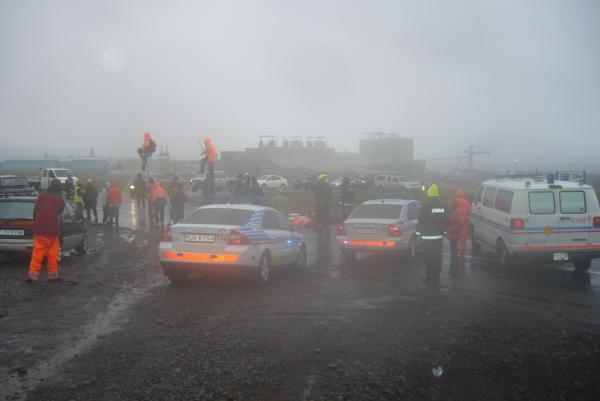
GRUNDARTANGI – Today 20 activists from Saving Iceland blockaded the single supply road to Century Aluminum’s smelter on Hvalfjordur and Elkem – Icelandic Alloys steel factory. They have chained themselves to each other using arm tubes to form a human blockade as well as using tripod for the first time in Icelandic history.
The blockade went on for three hours. Nobody was arrested. “We protest the environmental and human health hazards Century’s bauxite mining and refining activities in Jamaica, their plans for a new smelter and refinery in West Congo. Both Century’s and Elkem’s expansion plans will also mean destruction of unique geothermal areas in Iceland and produce large amounts of greenhouse gas emissions,” says Miriam Rose of Saving Iceland (1).
Century in West-Congo: opencast bauxite mining
In 2007 Century Aluminum Company signed a memorandum of understanding (MOU) with the Republic of the Congo (ROC) for the exclusive right to develop an aluminium smelter, alumina refinery and a bauxite mine (2). It specifies a minimum commitment of 500 megawatts of gas-generated electrical energy. Century is surveying where to mine the bauxite and will start building the smelter as soon as possible (3).
“We believe that the Republic of the Congo has all of the ingredients necessary to sustain a profitable aluminum industry,” said Century CEO Logan W. Kruger (2).
“Kruger is right,” says Snorri Páll Jónsson Úlfhildarson of Saving Iceland. “Transparency International rated the ROC as one of the most corrupt regimes in the world. Exactly the kind of regimes aluminium corporations like to deal with…” (4)
“It’s very unlikely the poor will have any benefit from this development but they will pay the price of the environmental impact. Oil revenue in the country has never reached them, why would it be different for bauxite?” Úlfhildarson continues.
“Considering the bauxite reserves in West Congo, it is clear that Century is planning large scale open cast mining there, in the same way other corporations are attempting in Orissa and what has also happened in Jamaica, Guyana and Guinea,” says Indian aluminium expert and author Samarendra Das who will be talking on this topic at Reykjavik Academia on Wednesday (see note a.).
“All over the world, where bauxite is mined the environment is being destroyed and people’s livelihoods and health taken away from them. People in Iceland need to know where the bauxite that is refined and then smelted into aluminium comes from,” says Das.
Century in Jamaica: environmental and health hazards
Century-owned St Ann Bauxite, it’s predecessor Kaiser as well as the ALCOA, RioTinto-Alcan and Rusal (which owns 1/3 of Century), are also active in Jamaica, have been held responsible for rainforest being destroyed and toxic pollution of drinking water (5,6,7). Century want to open up a second mine and refinery in a joint venture with Chinese Minmetals. That company is associated with prison labour factories and gross human rights abuses in China and elsewhere (see note b.).
Elkem – Icelandic Alloys: pollution accidents every week
Elkem - Icelandic Alloys wants to expand its facility at Grundartangi on Hvalfjordur for producing ferrosilicon for the steel industry. It is already one of Iceland’s largest contributors to greenhouse gases and other pollutants; expansion of the smelter would lead to a significant increase in Iceland’s carbon emissions (1).
In July 2007 it was reported (8) that Elkem ‘accidentally’ released a huge cloud of pollution from their plant. Apparently the accident was due to human error. Thordur Magnusson, an Elkem spokesman, then said that this human error “recurs several times a week.” Sigurbjorn Hjaltason, chairman of Kjosarhreppur parish, said that Elkem usually produced the emissions at night throughout the year.
About Saving Iceland
Last Friday, Saving Iceland stopped work at the construction site of Century Aluminum’s planned new smelter in Helguvík. This is part of their fourth summer of direct action against heavy industry in Iceland. In July 2007 activists also blockaded the smelter and steel factory.
Saving Iceland was started by Icelandic environmentalists asking for help to protest the Icelandic wilderness, the largest remaining in Europe, from heavy industry. As well as Century, other aluminium corporations ALCOA and Rio Tinto-Alcan want to construct new smelters. This would require exploitation of all the geothermal areas in the country, as well as damming all major glacial rivers (see note c.).
This year, the fourth action camp to protect Icelandic nature has been set up near the Hellisheidi geothermal plant east of Reykjavik, which is currently being expanded to produce electricity for Century Aluminum.
More information with a video of the actions
http://www.savingiceland.org
savingiceland at riseup.net
Notes
A.) On Wednesday July 23, 19.30 h. Saving Iceland and Futureland will hold a conference with the Indian writer, scientist and aluminium expert Samarendra Das and ‘Dreamland’ author Andri Snær Magnusson, on the influence of the aluminium industry in the third world. Also, the concept of aluminium as a ‘green’ product will be examined. It will take place at Reykjavik Academia, Hringbraut 121. Mr Das is available for interviews; please contact one of the Saving Iceland contacts above.
B.) In 2004 Minmetals attempted a takeover of Canadian mining company Noranda but were declined in 2005 due to serious concerns over human rights abuses by the Chinese company. This report details Minmetal’s association to forced labour:
Dhir, Aaron A. (2006). ’Of Takeovers, Foreign Investment and Human Rights: Unpacking the Noranda-Minmetals Conundrum’, Banking and Finance Law Review, 22, 77-104.
C.) For more details and an overview of projects in Iceland, see: http://www.savingiceland.org/sos
References
(1) Icelandic Ministry of the Environment (2006). Iceland’s fourth national communication on climate change, report to the UNFCCC. http://unfccc.int/resource/docs/natc/isl… [Accessed 20-6-08]
(2) AZ Materials News (2007). Century Aluminium to Build Aluminium Smelter in Republic of Congo.http://www.azom.com/News.asp?NewsID=7734 [Accessed 20-6-08]
(3) Afrique en Ligne (2008). Congo to build aluminium smelter in Pointe-Noire. http://www.afriquenligne.fr/news/africa-… [Accessed 20-6-08]
(4) Transparency International (2006). Corruption Perceptions Index 2006. Transparency International, Berlin.
(5) Zadie Neufville, April 6, 2001, ’Bauxite Mining Blamed for Deforestation’. See http://forests.org/archive/samerica/baux…. [Accessed 20-6-08]
(6) Mines and Communities report,’Bauxite Mine Fight Looms in Jamaica’s Cockpit Country’, 24th October 2006. http://www.minesandcommunities.org/artic…. [Accessed 20-6-08]
(7) Al Jazeera (2008). Environmental damage from mining in Jamaica, June 11, 2008 News. Available through http://www.youtube.com/watch?v=vJa2ftQwf…. [Accessed 20-6-08]
(8) MBL.is (2007). Reykur frá járnblendiverksmiðjunni Grundartanga. http://mbl.is/mm/frettir/innlent/2007/07… [Accessed 20-6-08]
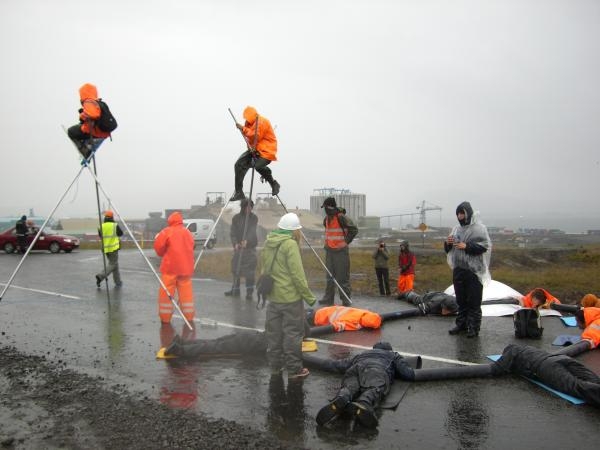
Ipod used for the first time in Icelandic history
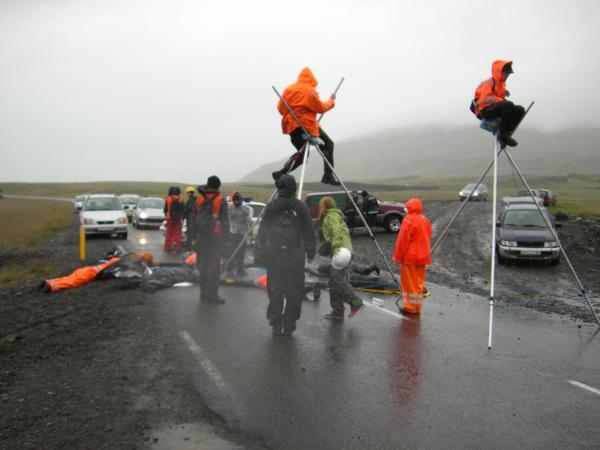
Saving Iceland Blockades Century Aluminum Smelter and Elkem Steel Factory
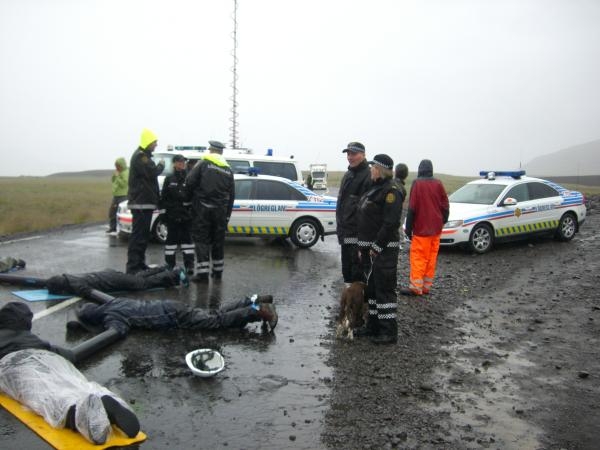
Saving Iceland Blockades Century Aluminum Smelter and Elkem Steel Factory
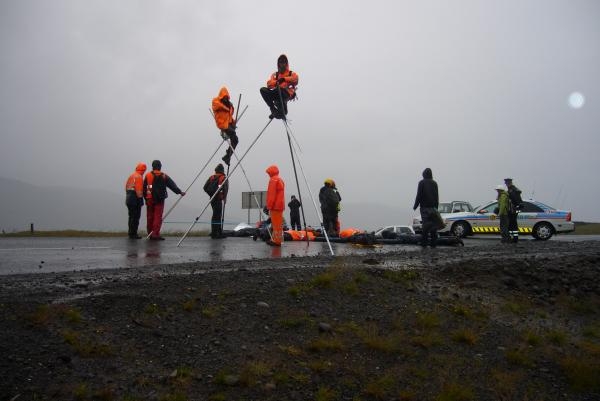
Saving Iceland Blockades Century Aluminum Smelter and Elkem Steel Factory
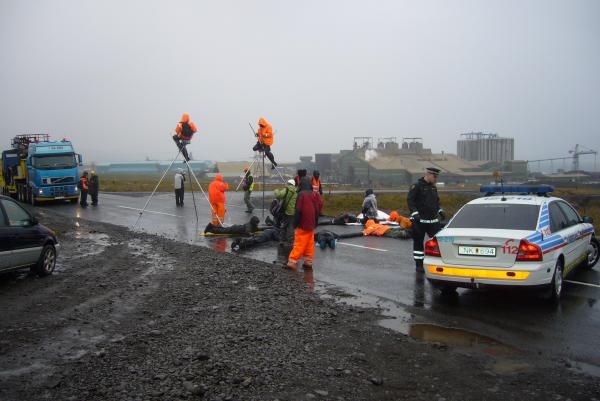
Saving Iceland Blockades Century Aluminum Smelter and Elkem Steel Factory
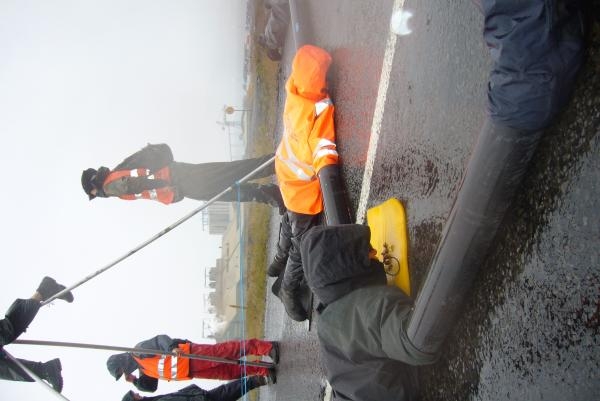
Saving Iceland Blockades Century Aluminum Smelter and Elkem Steel Factory
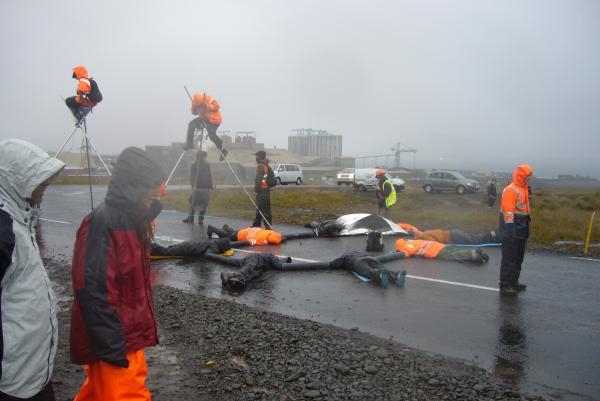
Saving Iceland Blockades Century Aluminum Smelter and Elkem Steel Factory
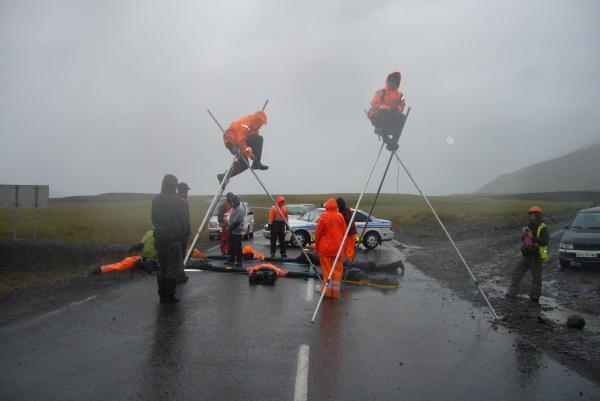
Saving Iceland Blockades Century Aluminum Smelter and Elkem Steel Factory
Saving Iceland Blockades Century Aluminum Smelter and Elkem Steel Factory

